
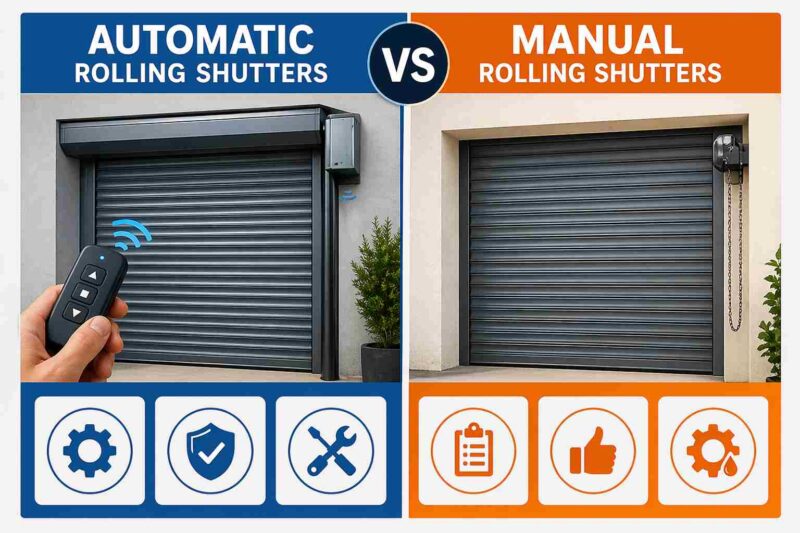
Automatic vs Manual Rolling Shutters: Features, Benefits, and Maintenance
When it comes to selecting the appropriate shutter system to install in your shop, warehouse or commercial area you may feel like deciding between tea and coffee, one is working and the other is also working, however, they are suitable in different circumstances. Automatic vs Manual Rolling Shutters when business owners compare the two, they most likely desire to know the convenience, security, price, and durability.
When comparing modern security technologies like an automatic perforated shutter, the knowledge that there are variations between automated and traditional security will be helpful in making a more informed investment. This guide explains the real world characteristics, advantages and maintenance requirements of both systems through practical knowledge of such industry standards as the Door and Access Systems Manufacturers Association (DASMA) and safety guidelines of Occupational Safety and Health Administration (OSHA) guidelines on industrial doors.
We can divide it into simple bits with no technical jargon or sales talk.
What Are Automatic and Manual Rolling Shutters?
Before comparing performance, it helps to understand how each system works.
Automatic Rolling Shutters
An automatic shutter uses a motor and control system to open and close the door. This automatic shutter system typically operates through a remote control, switch, or sensor. Many businesses prefer this setup because it saves time and reduces physical effort.
You will often see automated shutters in:
- Shopping malls
- Warehouses
- Hospitals
- Industrial facilities
- Modern retail stores
This type of motorized door system delivers smooth and consistent movement, especially in high traffic environments.
Manual Rolling Shutters
Manual shutters rely on human effort. Users lift or pull the shutter using a handle or chain mechanism. This manual shutter operation remains popular in small shops and locations with lower daily usage.
Common places using manual systems include:
- Small retail stores
- Storage units
- Residential garages
- Budget conscious businesses
In simple terms, automatic shutters work like a remote controlled car, while manual shutters feel more like a bicycle—reliable, straightforward, and powered by you.
Also Read : How pull & push rolling shutters work: pros, cons, and use cases
Key Features: Automatic vs Manual Rolling Shutters
Understanding features helps you match the shutter to your daily business needs.
Automatic Shutter Features
- Motor driven operation
- Remote or switch control
- Smooth opening and closing
- Safety sensors and overload protection
- Suitable for heavy duty use
Many modern installations include an electric rolling shutter with backup power support. This feature allows operation even during short power outages.
Manual Shutter Features
- Simple mechanical design
- Lower installation cost
- Easy to repair
- No electricity requirement
- Suitable for light to moderate usage
Manual systems focus on durability and simplicity. They work well where automation is not essential.
Benefits of Automatic Rolling Shutters
Automation continues to grow across industries because it improves efficiency and safety.
1. Convenience and Speed
The automatic shutters of the building open within a time frame of three seconds. The staff members can work more efficiently because Vijay Shutter Enterprises do not require physical strength to lift objects during peak business times.
The OSHA workplace safety guidelines require workplaces to reduce repetitive manual tasks because this practice decreases workplace injuries and worker exhaustion.
2. Enhanced Security
Automated shutters often include:
- Locking systems
- Alarm integration
- Access control features
These additions improve protection for commercial properties.
3. Professional Appearance
The combination of automated systems creates an organized and contemporary appearance for modern environments. Customers perceive automated systems as dependable and professional because of their automated nature.
Businesses searching for trusted automatic rolling shutter manufacturers often prioritize automation for this reason.
Benefits of Manual Rolling Shutters
Despite the rise of automation, manual shutters still offer strong advantages.
1. Cost Effective Installation
Manual shutters generally cost less to install because they do not require motors or electrical wiring.
This makes them ideal for:
- Small businesses
- Startups
- Low traffic locations
2. Simple Maintenance
Manual systems contain fewer moving parts. That simplicity reduces maintenance complexity and repair costs.
3. Reliable During Power Failures
The manual shutters function through their own system. Vijay Shutter Enterprises maintain operation during complete power failures which last for extended periods.
The system provides area power stability which serves as the primary benefit because power supply interruptions occur frequently in that location.
Maintenance Requirements for Both Systems
Scheduled maintenance ensures that all shutters operate their safest and most efficient states. The maintenance work must be performed because its absence leads to expensive repairs which resemble the results of skipping oil changes in vehicles.
Maintenance Tips for Automatic Systems
- Inspect motor performance every 6–12 months
- Lubricate moving components regularly
- Check safety sensors and wiring
- Test emergency backup systems
The professional service providers, who appear on the verified Google Business profile of Vijay Shutter Enterprises, advise their clients to schedule system inspections because this practice helps to extend equipment durability.
Maintenance Tips for Manual Systems
- Clean tracks and rollers
- Lubricate hinges and springs
- Inspect locking mechanisms
- Tighten loose hardware
Routine maintenance improves durability and reduces unexpected breakdowns.
Safety Considerations for Commercial Shutter Systems
Safety plays a critical role in any shutter installation.
According to DASMA safety standards, properly installed shutters should include:
- Balanced weight distribution
- Secure locking mechanisms
- Emergency release systems
- Regular inspection schedules
Automatic systems often include additional safety sensors that stop movement when obstacles appear. This feature protects employees and customers from injury.
Manual systems rely on correct installation and regular checks to maintain safe operation.
Cost Comparison: Automatic vs Manual Rolling Shutters
Cost often drives the final decision. However, focusing only on the initial price can be misleading.
Initial Cost
Automatic systems usually cost more upfront because they include motors, wiring, and control units.
Manual systems require fewer components, making them more affordable initially.
Long Term Value
Automatic shutters often provide better long term value because they:
- Reduce labor effort
- Improve efficiency
- Enhance security
- Increase property value
Businesses installing an automatic perforated shutter for retail display areas often recover costs through improved convenience and customer experience.
Which Option Is Right for Your Business?
The right choice depends on your daily operations, budget, and usage level.
Choose an automatic shutter if:
- Your business opens and closes frequently
- You handle heavy traffic
- You want faster operation
- You prioritize convenience and security
Choose a manual shutter if:
- Usage remains limited
- Budget constraints exist
- Power supply remains unreliable
- Simplicity matters most
Many business owners consult experienced automatic rolling shutter manufacturers before making a final decision. Expert guidance ensures the system matches operational needs.
The Role of Modern Technology in Shutter Systems
Technology continues to improve shutter performance. Modern automation now includes:
- Remote control access
- Smart sensors
- Noise reduction systems
- Energy efficient motors
These innovations make automated systems safer and more reliable than earlier versions.
As businesses modernize operations, demand for automated shutters continues to grow across retail and industrial sectors.
Final Thoughts: Making a Smart Shutter Investment
There is no need for complex calculations when it comes to the decision between Automatic vs Manual Rolling Shutters. All you need to do is to adjust the system to your daily workload and long term objectives.
The following are the main lessons learned:
- Automatic shutters are fast, convenient and highly safe.
- Manual shutters are inexpensive and easy to use.
- Periodic maintenance enhances longevity and performance.
- Correct installation will provide dependable functioning.
And keep in mind security equipment must operate in the background, quietly as it works, but without the need to have someone staring at it all the time. When you open a shutter in a gentle manner every morning, and close it safely every night, you realize you have done the right thing.
In case your business needs a stable performance, a high quality modernity, and a stable protection, today the right choice of a shutter system may save you time, efforts, and the cost of repairs tomorrow.

Leave a Reply